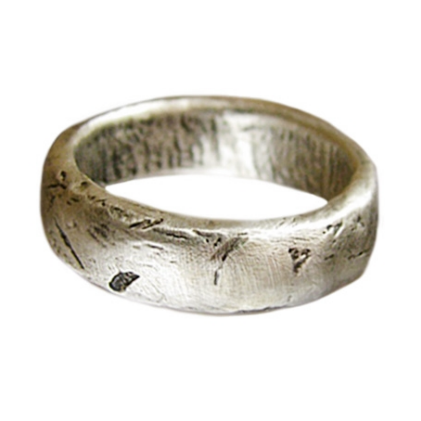
Does your engagement ring have to have a diamond?

There is no denying that diamonds are the standard for engagement and wedding rings, but does your engagement ring have to have a diamond?

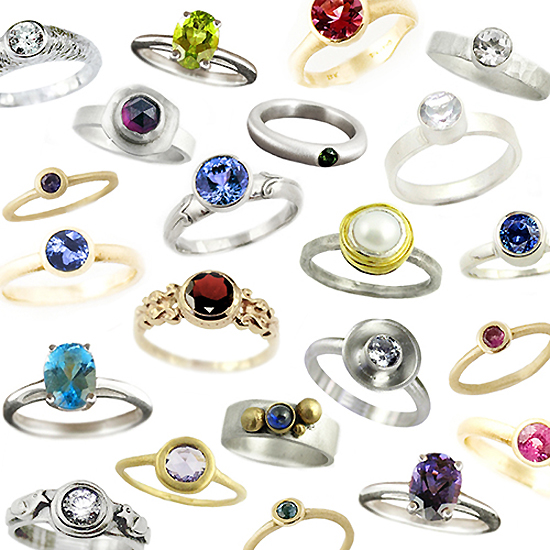
The answer is no, as you may have guessed. Here at Turtle Love Co., we pride ourselves on offering a wide range of diamond engagement rings that can fit any budget - but we also offer an array of rings with diamond alternative stones to fit any style. We offer sterling silver as well as gold rings, and we have a plethora alternative gemstones.

It’s raining rings - sapphires, pearls, and white topaz (oh my!) among others!

Some people like a little color in their engagement ring - we offer lots of colorful options, such as sapphires (both blue and pink), amethyst, iolite, blue topaz, garnet, kyanite and tourmaline. We also offer some beautiful pearl engagement rings.

Some people like the look of a diamond, but worry about the price or the ethics of such a precious stone. While many of our artists only work with conflict free diamonds and other stones, white topaz is a beautiful diamond alternative.

If you have questions about our diamond alternative options, conflict-free diamonds, or if you are looking for a ring with a particular gemstone, feel free to email [email protected] - we’re here to help!

Rose gold is the word: a look at two different types of rose gold rings at Turtle Love Co.

A recent article in the New York Times declared that rose gold is the new preferred metal for high fashion jewelers, who find it a more discrete and softer alternative to traditional yellow gold. Turtle Love Co. has been an admirer of rose gold’s warm color for a while now and we offer a number of items in rose gold on our website. The color of rose gold is created by it being alloyed (mixed) with copper. In the case of 18K rose gold, the content usually equals 75% pure gold and 25% copper to create a pleasant slightly pink hue. Because of this mixing of metals, rose gold has a unique feeling of being both modern and traditional. With that idea in mind, we’ve put together a selection of wedding and engagement rings from our website that embody both the new and old feeling of this beautiful metal.

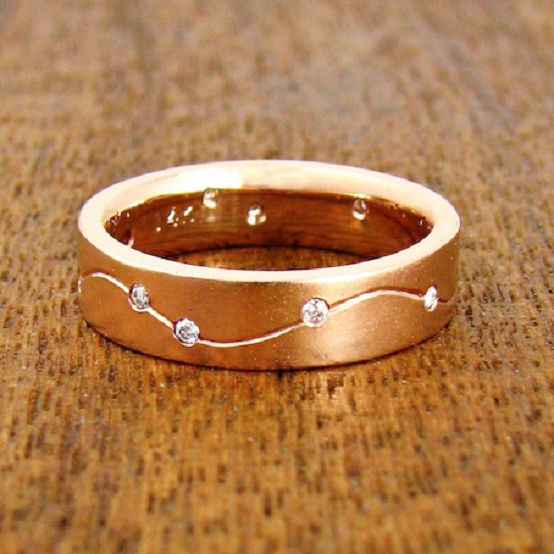
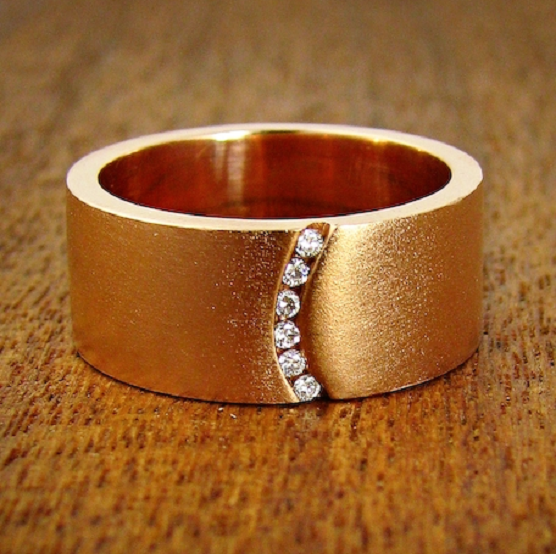
The rings that most exemplify the modern side of rose gold are made for us by San Francisco artist Jeannie Hwang. These rose gold wedding rings draw inspiration from the structures found in our solar system and use diamonds to conjure scenes of a solar flare or a constellation just starting to shine through a cloudless sky at sunset. The minimalist aesthetic of these pieces helps to highlight the beauty of the materials.

Constellation Wedding Band - Rose Gold with Diamonds

Constellation Wedding Band - Rose Gold with Diamonds

Solar Flare Wedding Band - Rose Gold with Diamonds

Solar Flare Wedding Band - Rose Gold with Diamonds

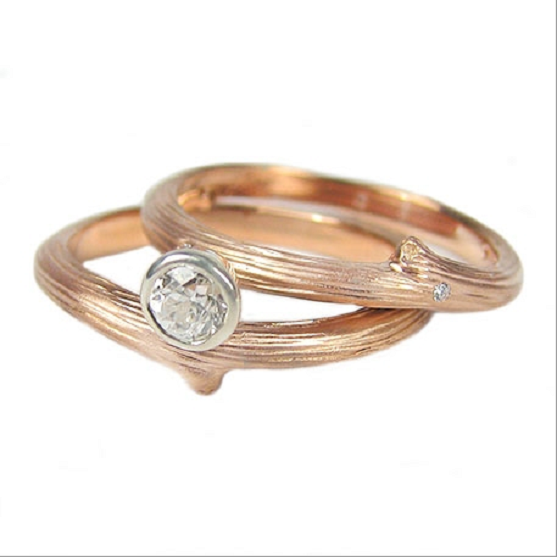
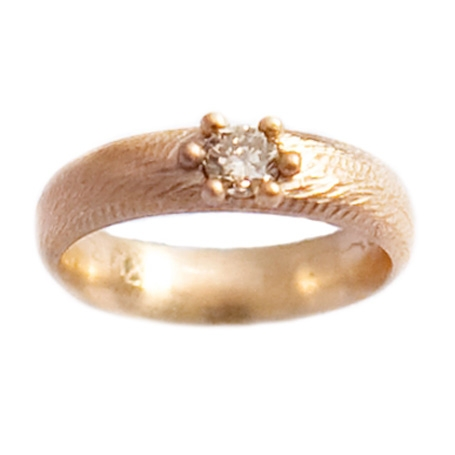
The softer side of rose gold taps into the natural shapes here on earth. When paired with specific textures, the gold can help turn a ring into a gently twisted tree branch or a swift river reflecting the morning sun’s rays. Our Diamond Vine Engagement Ring (seen here with our Rose Gold Vine Ring with Diamonds) is created by California artist Midori Ferris Wayne. Our Rose Gold Diamond Bouquet Engagement Ring is handcrafted by Dahlia Kanner in her studio in Rhode Island.

Diamond Vine Engagement Ring and Rose Gold Vine with Diamonds

Diamond Vine Engagement Ring and Rose Gold Vine Ring with Diamonds

Rose Gold Diamond Bouquet Engagement Ring

Rose Gold Diamond Bouquet Engagement Ring

On the care and keeping of sterling silver jewelry

Sterling silver is a fantastic jewelry metal - it wears well, it’s durable, and it has the look of white gold at a fraction of the cost. It can hold any gemstone, from the most delicate pearl to the super-strong diamond, and look radiant and flawless. Like gold, sterling silver can last a lifetime - or much longer! The key to making your sterling silver jewelry last from generation to generation is knowing how to take care of it.
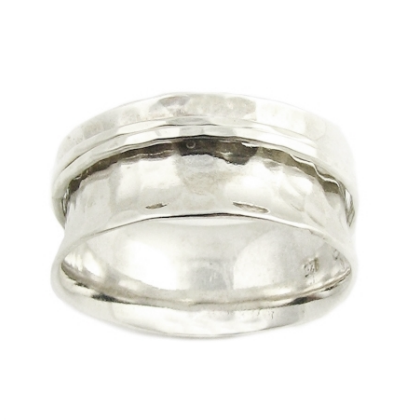
Galileo Wedding Band with Two Silver Spinners from Turtle Love Co.

Galileo Wedding Band with Two Silver Spinners from Turtle Love Co.

What to expect from your new sterling silver piece

You just received a brand new piece of jewelry. Whether it was created just for you by a skilled artisan a few days ago, or a vintage piece purchased from our website or passed down to you from your great grandmother, there are some things you should know. Even the highest quality sterling silver can tarnish and your skin can get discolored after the first few wears of wearing the piece. It’s totally normal! It doesn’t happen to everyone, but sometimes the chemical make-up of your jewelry and the natural oils of your skin can react to each other in a less than ideal way.

However, this is NOT permanent! The best thing you can do in this situation is to keep wearing the piece every day. At the end of each day, wash your skin and polish your piece of jewelry with a polishing cloth*. In just one to two weeks, your skin and your jewelry will ‘get used to each other’ and there will be no more tarnish and discoloration!

Regular maintenance

Sterling silver can dull, and over a long period of time natural oxidation (blackening in the creases of a sterling silver piece) will occur. To keep your piece looking its best, use a polishing cloth* on your item periodically. The more you wear your item, the less likely it is to become oxidized because the oils from your skin protect it. Silver jewelry items you don’t wear regularly won’t have the oils of your skin to protect it, so they should be periodically cleaned as well to avoid tarnish and oxidization. For a bit of extra luster, you can even add a small drop of olive oil to your polishing cloth before you use it.
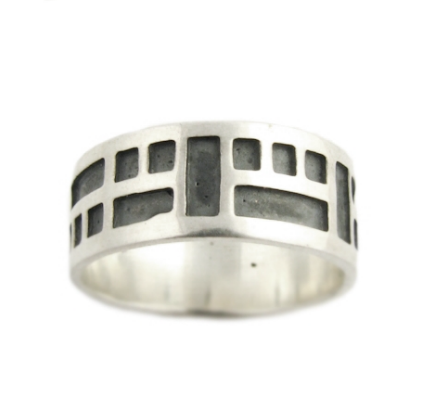
Equilibrium Silver Ring from Turtle Love Co.

For pieces like our Equilibrium Silver Ring, use a polishing cloth on the shiny silver parts, taking care not to polish the oxidized spaces.

Brushed silver and oxidized silver

Brushed silver, or silver with any kind of a matte finished, should NOT be cleaned with a polishing cloth. The finish on a brushed or matte silver piece is more delicate than buffed, shiny silver, so the chemicals in your polishing cloth will eventually wear the matte finish away. The best way to clean brushed or matte silver is to brush it gently with a toothbrush that’s been dipped in a mixture of water and a little bit of baking soda. Once you’ve brushed it, rinse with water and pat dry with a clean cloth.

For oxidized silver, use a a tiny bit of soap (Don’t use any soap with citrus in it because the acid can be damaging to silver) and water on a soft cloth or toothbrush. Scrub the item gently, rinse, and pat dry.

Some oxidized silver pieces feature bits of silver that are shiny - when this is the case, you can use a polishing cloth on the shiny parts, being careful not to scrub any of the oxidization off.

It’s also important to keep in mind that some matte finishes and some oxidization will naturally wear off your pieces over an extended period of time if you wear them every day. This is because the oils in your skin work as a very gentle polishing agent.

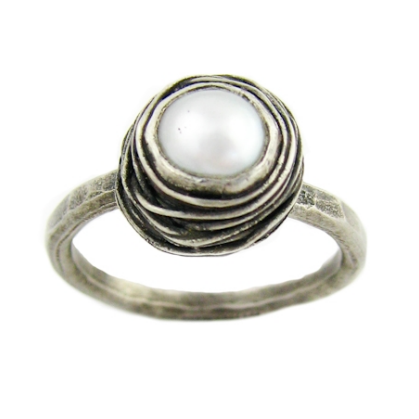
Nested White Pearl Engagement Ring from Turtle Love Co.

Not all gems are equal when it comes to their care. Pearls, like the one in this Nested White Pearl Engagement Ring, are soft and would be damaged if polished.

Gemstones

Silver jewelry can feature a variety of gemstones, and it’s important to know how delicate each stone is. The hardest and most durable stones (such as diamonds and sapphires) can stand up to the chemicals in a polishing cloth. However, most soft and porous stones (such as pearls and opals) are too delicate and can be damaged with the use of a polishing cloth.


These are just the basics! If you are unsure whether or not a stone can withstand exposure to regular polishing, or if you have any other questions, you can always email [email protected] - we love to help!


*A polishing cloth is only recommended for shiny sterling silver pieces - not oxidized silver or brushed silver.

So, what is gold vermeil anyway?

If you read our last post about the new work by Talley & Roberta Starbird (an awesome mother-daughter team from Austin!), you may be wondering about gold vermeil. This method of gold-plating originated in France in 1750 during the reign of Louis XV. This means we say ‘gold vehr-may’ (not to be confused with ‘gold lamé’). To give you some context of the time period that gave rise to gold vermeil, at left is a reproduction of a painting of Louis XV as a kid. Kings started young in those days (he was 5 when he succeeded the throne), when curly, gray wigs were very stylish for the elite and powerful. We’re glad that’s no longer a fashion trend.

So, gold vermeil. If a piece of jewelry is gold-plated, we think it ought to be gold vermeil (sometimes it’s also called ‘gold filled’). It’s the optimal plating technique for its use of only precious metals: 925 sterling silver and a very thin layer of gold (usually 14k and up). This sets gold vermeil apart from other plated metals that may involve covering the silver with nickel or another base metal before the gold goes on. Furthermore, the gold is fused to the sterling silver in such a way that prevents any flaking or chipping of the gold layer. This means that people with sterling silver sensitivities can wear gold vermeil as if it were solid gold, and not worry about skin irritation. So gold vermeil indicates a high-quality, affordable option that will not irritate your skin. That’s what we like.

Jewelers in the 18th century used a process called fire-gilding to create gold vermeil. They would apply a mixture of gold and mercury to the surface of the silver, and then expose it all to extreme heat (hence the fire). This caused the mercury to essentially vaporize, leaving the thin film of gold in place. At that time folks didn’t know how toxic mercury was, so it was used in all kinds of professional trades, from metal-smithing to hat making. Breathing in the vaporized mercury resulted in a person going “as mad as a hatter.” (Interesting side-note: Lewis Carroll, the creator of such winsome characters as Alice and the Mad Hatter, grew up in a town where hat making was the main trade in the 1800′s.) Fortunately for everyone, we now know all about mercury’s toxic properties.

Today, gold vermeil is produced using an electrolytic process, which means an electric current is used to create a chemical reaction. We’re not sure how that works, but it sounds cool, and it’s safe for the jeweler. Now that you know all about gold vermeil, you’re probably curious to see it in action. Starbird uses it to great effect in their lovely jewelry, don’t you think?