Moonstone, the “Lover’s Stone”

Moonstone belongs to the feldspar group of minerals and is unique among gemstones for the inclusions of different minerals that create an iridescent shimmer known as ‘adularescence.’ The inclusions are essentially different layers of mineral that form an ideal labyrinth for the reflection of the light spectrum, especially indigo and violet. People in ancient India and other parts of Asia believed moonstones to be rays of solidified moonlight, and likened the shimmering hue to a good spirit residing in the stone. For this reason, moonstone is still considered sacred in many parts of India. Moonstone is the birthstone for the month of June, and is given on the occasion of 13th anniversaries.

Many consider the moonstone to be the true “lover’s stone.” The ancient Greeks called moonstone Aphroselene, combining the names of Aphrodite, the goddess of love, with Selene, the goddess of the moon. The ancient Greeks weren’t the only ones to associate the moonstone with love, fertility, and fidelity: this particularly captivating gemstone has often been worn in diverse cultures with the belief that it has the power to enchant a faithful lover. Perhaps it is the subtle shimmer of the moonstone that has encouraged its association with the ethereal qualities of emotion, the subconscious, and love. Some believe the moonstone has the ability to help us be more intuitive and understanding creatures.
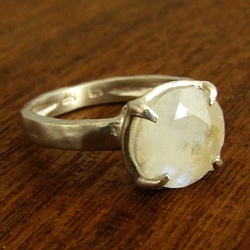
Whatever the cause of moonstone’s airy, gossamer beauty, the Monhegan Moonstone Engagement Ring is a piece to be deeply cherished.
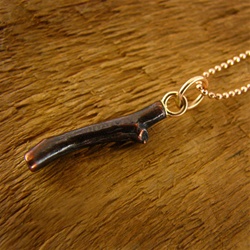
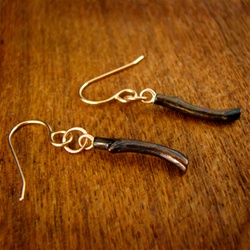
A Japanese tradition revived in new jewelry by Midori Ferris-Wayne

Shakudo is an extraordinary metal with a venerable history beginning in 15th century Japan or perhaps even in the ancient societies of Greece, Rome, and Egypt. Shakudo is most often associated with the decorative metalwork on the swords of Japanese samurai. Today shakudo can be seen in the craft of ‘mokume-gane’, a metal-layering process used to make ornamental containers that results in the appearance of highly-textured wood grain. Shakudo is evocative of ancient history and the elemental forces of nature.

Traditionally, shakudo is an alloy of copper and 4 - 25% pure gold which is then treated with a chemical solution to achieve the beautiful bluish-black or dark purple metallic patina. Midori Ferris-Wayne has developed her own combination of gold, copper, and chemistry to create the signature chocolate-brown shakudo that so gorgeously awakens the spirit of the natural world.

As the trees begin to lose their leaves in Autumn’s last hurrah, we’ve added to our collection these gorgeous shakudo pieces by Midori Ferris-Wayne: a reminder that even without their foliage, trees continue to inspire awe.

New Pieces, Ancient Story

From the beginning, gold has been a symbol of wealth and power. It has been highly valued since at the least the Bronze Age, around the 2nd millennium BC and has been used as currency and body adornment ever since. The universal beauty of gold has captivated the aesthetics of people in all parts of the world, for as long as historical records exist, and beyond.

The ancient Egyptian pharaohs and queens were famous for gold ornamentation in sacred and everyday objects. They believed that their deities shone with a golden light – it was considered a divine and invincible metal. Gold has even changed the course of world history several times: once by the rumors of decadent golden cities in ancient Central America and again several hundred years later when rich gold deposits were discovered in the North American west. Gold has an ancient history and a timeless allure.

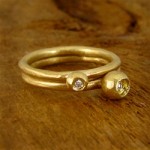
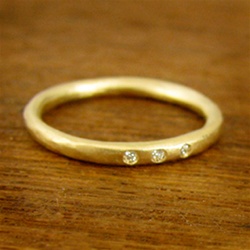
Because pure gold (24k) is so soft a metal, it is usually alloyed with stronger metals to add strength for everyday wear. The standard system of carats is used world-wide to indicate the purity of the precious metal. These gorgeous new pieces by Michele Scholnick are made with 18k gold.

Peridot, the Evening Emerald

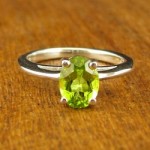
Peridot is one of the few gems that can only be found in one color: green. It was called the “evening emerald” by the ancient Romans. Where the deep green of emerald is hard to make out in poor lighting, peridot’s luminous green can be seen even on a dark night. Peridot is the birthstone of August, and can be given as gift on 16th anniversaries.

This ancient stone has been referenced in papyrus texts from Egypt dating from the 2nd millennium BCE. In fact, it was known to be Cleopatra’s favorite gemstone. The brilliant green of peridot has been associated with the sun and new plant growth. Ancient Egyptian priests would drink from cups of peridot, believing they would be brought closer to their goddess Isis, who ruled nature. Often called “gem of the sun” in ancient times, some believed that peridot would protect against evil spirits.

Whatever you believe - that peridot is a confession of your true love, like the gem Napoleon sent to Empress Josephine, or that it will nurture growth like the sun - peridot will surely shine brightly for generations.